
NTTS2027

WHAT IS NTTS
The New Techniques and Technologies for Statistics (NTTS) conference is an international scientific event held every two years and organized by Eurostat. It focuses on innovative methods and technologies for official statistics, exploring how emerging tools and digital advancements shape data collection, production, and dissemination systems.
The conference serves as a platform for presenting findings from ongoing research and innovation projects in official statistics, while also fostering the development of new initiatives aimed at improving the quality, efficiency, and relevance of statistical information.
The NTTS conference series was initially triennial, and with the conference taking place in 1992 (Bonn), 1995 (Bonn), 1998 (Sorrento) and 2001 (Hersonissos, Crete). After a break of 8 years, the conference was re-launched on a biannual basis, and took place in Brussels in 2009, 2011, 2013, 2015 2017 and 2019. NTTS 2021 was fully virtual, whereas NTTS 2023 and NTTS 2025 took place in Brussels.
NTTS 2027 will take place in Brussels at the Charlemagne Building from 16 to 18 March 2027, with satellite events on 15 and 19 March.
Participation in the conference is free of charge, with no registration fee.
CALL FOR ABSTRACT
The call for abstracts is now open!
Deadline for submission is 15 October 2026
1.In order to submit, please create a profile on CMT first.
2.Then, complete the Word document and submit.
-Kindly note that the abstract submission will undergo a blinded review process, so please ensure that no identifying information is included in the document-
KEY DATES
Key dates:
Call for abstracts opened on 1 June 2026
Deadline for submission of abstracts: 15 October 2026
Notification of acceptance: 16 November 2026
Opening of registrations: 1 December 2026
Deadline for registrations: 15 February 2027
SPEAKERS
Mariana KOTZEVA

Mariana Kotzeva is Director-General of Eurostat from 1 January 2017. She joined Eurostat as a special adviser in 2012, becoming its Deputy Director-General in 2014. Prior to joining the European Commission, Ms Kotzeva was the Head of Bulgaria’s National Statistical Institute. She also held a number of high-level consulting posts in the Bulgarian and foreign administrations, and led international projects for the United Nations and the World Bank. She has a Master's degree in economics and a PhD in Statistics and Econometrics. She is an Associate Professor of Statistics at the University of National and World Economy in Sofia.
Athanasios THANOPOULOS

Deputy Director-General of Eurostat.
He holds a PhD in Economics from the University of
Pittsburgh, a DEA and a DEEQA in Mathematical Economics and Econometrics from the Toulouse School of Economics, and a Ptychio in Economics from the National & Kapodistrian University of Athens.
On 30 September 2025, the European Commission appointed him Deputy Director-General of Eurostat
On January 2016, following an international selection procedure, the ad hoc international Committee of Experts unanimously recommended his appointment as President of the Hellenic Statistical Authority.
Hadley WICKHAM
Keynote speech: Making the implicit explicit: using data dictionaries to make the most of human-agent collaboration

Hadley is Chief Scientist at Posit PBC, winner of the 2019 COPSS award, and a member of the R Foundation.
He builds tools (both computational and cognitive) to make data science easier, faster, and more fun. His work includes packages for data science (like the tidyverse, which includes ggplot2, dplyr, and tidyr)and principled software development (e.g. roxygen2, testthat, and pkgdown). He is also a writer, educator, and speaker promoting the use of R for data science.
Learn more on his website: http://hadley.nz
MONICA BREZZI

Dr Monica Brezzi is Deputy Director in the OECD Statistics and Data Directorate (SDD). Before joining SDD in 2025, she held different positions at the OECD, Council of Europe Development Bank and the Italian Ministry of Economy where she led international efforts to develop new metrics on policy issues related to trust in government, effective public services, regional and urban development, and public investment. She spearheaded the creation of the OECD survey on Drivers of Trust in Public Institutions and a novel Global Database on Metropolitan Areas.
LATEST NEWS
02.06.2026
The call for abstract is now open!
23.02.2026
Tracks and topics section is now available!
AN INCLUSIVE, DIGITAL AND GREEN EVENT
In a world where technology shapes our lives, we believe it's vital to include every voice. NTTS2027 is more than just a conference; it's a melting pot of ideas, cultures, and perspectives. We're ensuring that everyone feels welcomed and valued. Our commitment to inclusivity isn't just about who attends, but how they experience and contribute to the event. From keynotes to panels, every aspect of NTTS2027 is designed to be a reflection of the diverse world we live in.
Sustainability is a core principle for us. At NTTS2027, we're integrating eco-friendly practices at every level. From minimizing waste to choosing sustainable materials, we're dedicated to reducing our environmental footprint. Our green initiatives extend to our choice of venue, catering, and even the way we manage energy consumption throughout the event.
The event will be web streamed live.
THE CHARLEMAGNE BUILDING
To access the Charlemagne Building (Rue de la Loi 170, B-1000 Brussels), please bring:
• The same document you used during registration (ID or passport).
• Your email confirmation of registration, including the QR code.
• EU institution employees are kindly requested to present their badge.
Additionally, all participants, including EC employees, must pick up their conference badge upon arrival.
How to get to Charlemagne Building (address: Rue de la Loi 170, B-1000 Brussels):

From Airport: Brussels Airport Zaventem
Transfer by Bus: There is a convenient (approx 3 Euros) shuttle bus (Line 12)
from the airport to the City, get off at Schuman (approx 30 minutes). From the
Schuman stop, walk along Rue de la Loi (Wetstraat). The Charlemagne building
is on the righthand side.
Transfer by Taxi: A taxi from the Airport takes about 20 minutes and costs about
30 Euros.
Transfer by Train: Take the shuttle from the airport to the Centre of Brussels to
Central Station (Gare Centrale). The trains leave in intervals of approx. 15
minutes and cost 2.8 Euros. Then follow the instructions from the Train Station,
via the Metro to Schuman.
From Train Station:
Central Station (Gare Centrale) via Metro to Schuman At the Gare Centrale take
the underground (Metro) in the direction of Stockel or Herrmann-Debroux. 5 stops
on, leave the metro at Schuman From Schuman, walk along Rue de la Loi
(Wetstraat). The Charlemagne building is on the right-hand side.
South Station (Gare du Midi) via Metro to Schuman. At the Gare du Midi take
the underground (Metro 2) in the direction of Simonis and change at Arts-Loi
(Kunst Wet), take the underground (Metro 1) in the direction of Stockel or
Herrmann-Debroux. 5 stops on, leave the metro at Schuman. From Schuman,
walk along Rue de la Loi. (Wetstraat). The Charlemagne building is on the right-hand
side.
FOLLOW US ON LINKEDIN

ORGANISING COMMITTEE

Dario Buono (Chair)
Ph.D. in Economics, at Eurostat since 2008, currently Team Leader of Methodology, EMOS (EMOS dashboard | Eurostat CROS (europa.eu)) and ESTP (ESTP dashboard | Eurostat CROS (europa.eu)). Expert/Trainer in Time Series Econometrics, VAR modelling & Macroeconomics Forecasting. Research interests include measures for uncertainty around point estimates and use of LLMs and AI for Official Statistics.

Cristiano Tessitore (Programme)
Ph.D in Statistics, at Eurostat since 2012.

Maria Isabel Lazaro External and interinstitutional relations. Communication at Eurostat

(Logistics, communication) Ph.D. is Psychology, at the EC since 2006, at Eurostat since 2017.
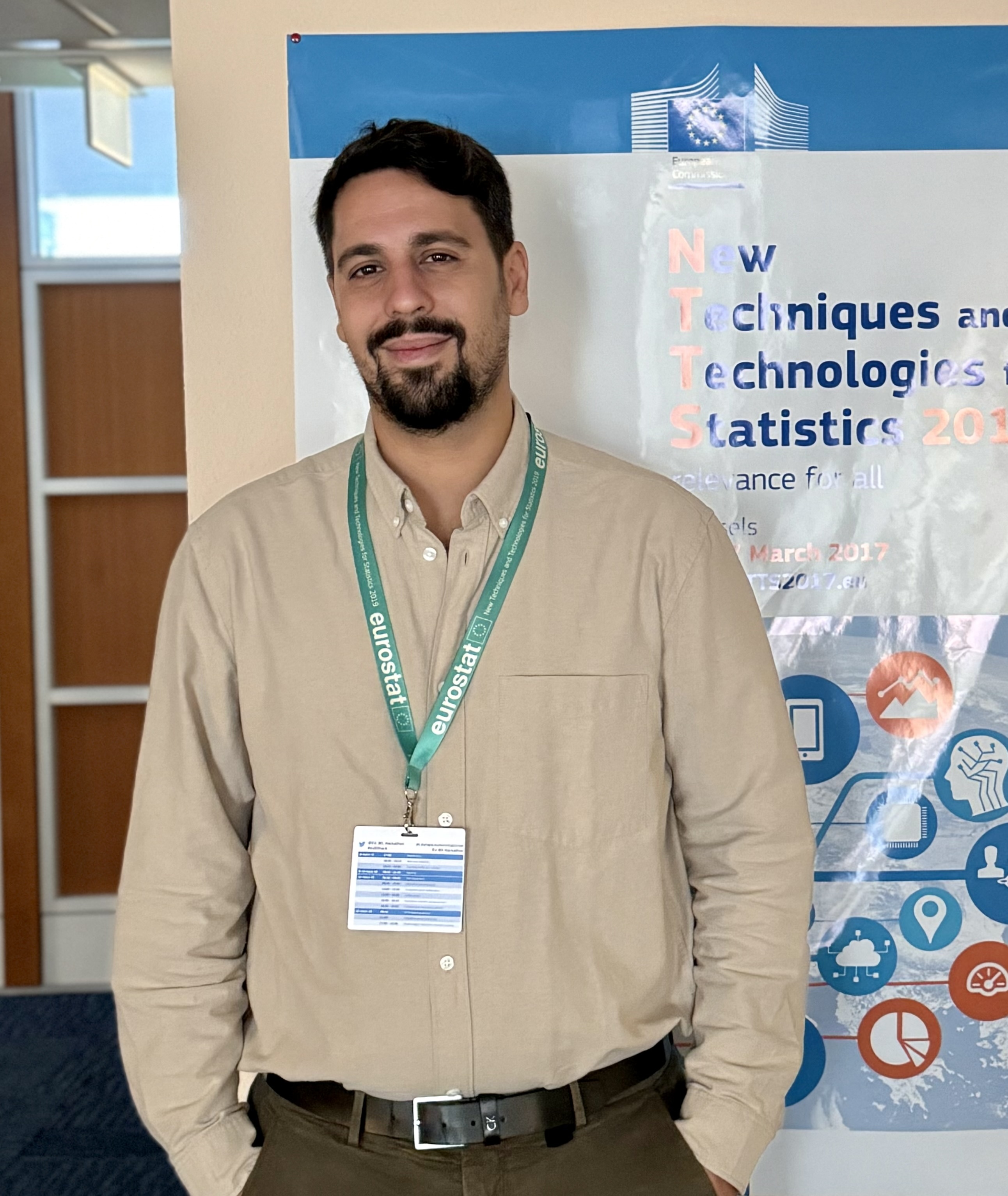
Luigi Di Razza (Web Management and Social Media)

Tina Steenvoorden (EMOS Master Thesis Competition)
Disclaimer
The Microsoft CMT service was used for managing the peer-reviewing process for this conference. This service was provided for free by Microsoft and they bore all expenses, including costs for Azure cloud services as well as for software development and support.
TRACKS AND TOPICS

Track A. Data collection and integration
-
Questionnaire development and testing
-
Automated data collection
-
Non-response and burden reduction
-
Sample design, weighting and calibration
-
Data integration and linkage
-
Data validation and data quality
-
Sensor data, privately held data, citizen science
-
Survey infrastructures (smart surveys, experimental surveys, portals)
-
Web Intelligence, web data and webscraping
-
Smart Surveys and cloud-based survey infrastructure
Track B. Artificial Intelligence for Official Statistics
-
Machine Learning
-
Generative artificial intelligence for statistics
-
Semantic web, Natural Language Processing and Large Language Models
-
Legal and ethical aspects of algorithms
-
AI readiness
-
AI Governance and use in production
-
AI skills for the next generation of data scientists
-
AI powered chat bots
-
Claude Code, ChatGPT Codex, etc
Track C. Technologies: software and tools
-
Use of R in official statistics
-
Use of Python in official statistics
-
Open-source software in official statistics
-
Code sharing and collaborative development
-
Reproducible research and production
-
Cloud computing and scalable infrastructures
-
Blockchain, distributed ledgers, and smart contracts applied to official statistics
Track D. Estimation Techniques
-
Nowcasting and flash estimates
-
Time series econometrics
-
Data cleaning and outlier detection
-
Seasonal adjustment
-
Variance estimation
-
Small area estimation
-
Forecasting
-
Microsimulation
-
Causal Modeling, Complexity and Network Science
-
Inference from non-probability samples
Track E. Security and Privacy
-
Statistical disclosure control and confidentiality
-
Synthetic data
-
Information security and cybersecurity
-
Use of privately held data for public purposes
-
Privacy preserving technologies applied to official statistics
-
Multinational repositories and exchange, sharing and use of microdata
Track F. Users Outreach, Communication and Dissemination
-
Visualization tools and infographics
-
Data Storytelling
-
Methods for capturing user input, assessing user needs, and user satisfaction
-
Statistical literacy
-
Collaborating with private sector and academia
-
Data Spaces
Track G. Domains for Official Statistics
-
Digital economy
-
Distributional National Accounts
-
Defence statistics
-
Environment and sustainable use of natural resources
-
New challenges in the measurement of economic vulnerabilities and inequalities
-
GIS, regional and spatial statistics
-
Economic Statistics
-
Labour market statistics
-
Business statistics
-
Energy and Transport
SCIENTIFIC COMMITTEE

Alvaro Diez is Head of Unit at Eurostat, the statistical office of the European Union, where he oversees the unit in charge of innovation and digital transformation. With a background in computer engineering, he previously held various leadership roles in Eurostat’s unit dedicated to digitalisation and science and technology statistics and before that on the IT units dedicated to statistical production. Prior to joining the European Commission in 2011, he worked for several years in the private IT sector.

Daniela Andrén is an Associate Professor of Economics at Örebro University School of Business, Sweden, with a PhD in Economics from Göteborg University, Sweden, and a Master's degree in economic cybernetics from the Academy of Economic Studies, Bucharest, Romania. Her research is characterized by a strong interest in exploring new data sources and developing innovative methods to strengthen research designs for effect estimation. She has over 25 years of experience working with Swedish administrative register data, with a focus on estimating the effects of public policy. Her research on individual well-being has used biomarkers, and she has pioneered the use of well-being valuation approaches to assess the impact of health conditions on individuals and their networks of family and friends in Sweden. She has published in peer-reviewed international journals on economics, health and social sciences, with particular emphasis on methodological approaches to evaluating public interventions. She teaches causal inference for economists and normative ethics in informatics, with a focus on the ethical dimensions of algorithms, information systems, and cybersecurity.
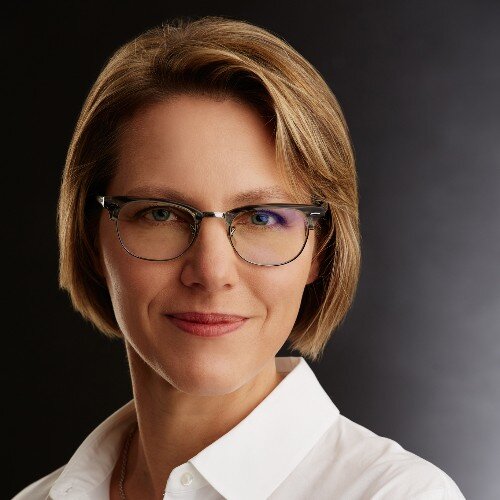
Mojca Bavdaž (University of Ljubljana)
Mojca Bavdaž is Associate Professor at the School of Economics and Business, University of Ljubljana. She is a member of the Methodological and Statistical Councils at the Slovenian National Statistical Institute and a former member of the EMOS Board. Her main research areas include measurement in economics and related data collection. She is also interested in dissemination, visualization and use of official statistics data.

Annamaria Bianchi (University of Bergamo)
Annamaria Bianchi is Associate Professor in Economic Statistics at the University of Bergamo. She completed her double PhD in Mathematics and Statistics for Computational Sciences at the University of Milan and in Sciences Mathématiques at the University Paris 6 in 2007. She is a survey statistician with interests in non-probabilistic methods for data collection and inference, the use of digital trace data to enhance survey research, adaptive survey designs, representativity indicators, and online panels and web surveys. From 2023 till 2025 she has been member of the Executive Committee of the International Association of Survey Statisticians (IASS) of the International Statistical Institute (ISI) and since 2024 she is Elected Member of the ISI. Since 2024 she is member of the Board of the European Master in Official Statistics (EMOS).

Ana-Maria Ciuhu (Romanian National Institute of Statistics)
She is a statistician at the Romanian National Institute of Statistics and a senior researcher at the Institute of National Economy of the Romanian Academy. She is working on survey methodology and on integrating open-source tools—particularly R—into statistical production. She has been involved in methodological and applied studies that successfully introduced the use of R within Romanian official statistics. She continues to apply R extensively in her research and in methodological processes such as sampling, calibration, imputation, and the development of modern workflows that promote the adoption of open-source solutions in official statistics.

Florian Dumpert heads a unit in the Federal Statistical Office of Germany (Destatis) that develops methodological and technological solutions and architectures for statistical production. The unit works on topics related to metadata, quality, digitisation, standardisation and automation of official statistics. His research interests include in particular machine learning, statistical data processing and imputation.
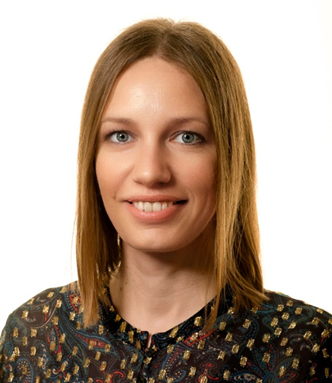
Anita Harmina is a Senior Adviser in the Statistics Area of the Croatian National Bank, where she leads the development and dissemination of experimental statistics on climate change-related risks, household wealth, and distributional inequalities. In this role, she also contributes to several expert groups within the ESCB and the OECD, supporting international efforts to advance statistical development and close data gaps. Her interests include innovative approaches to official and experimental statistics, the integration of survey, administrative and new data sources, composite indicator methodology and multidimensional measurement, and applied econometrics. She is an elected member of the ISI and a member of the IAOS and IASS.
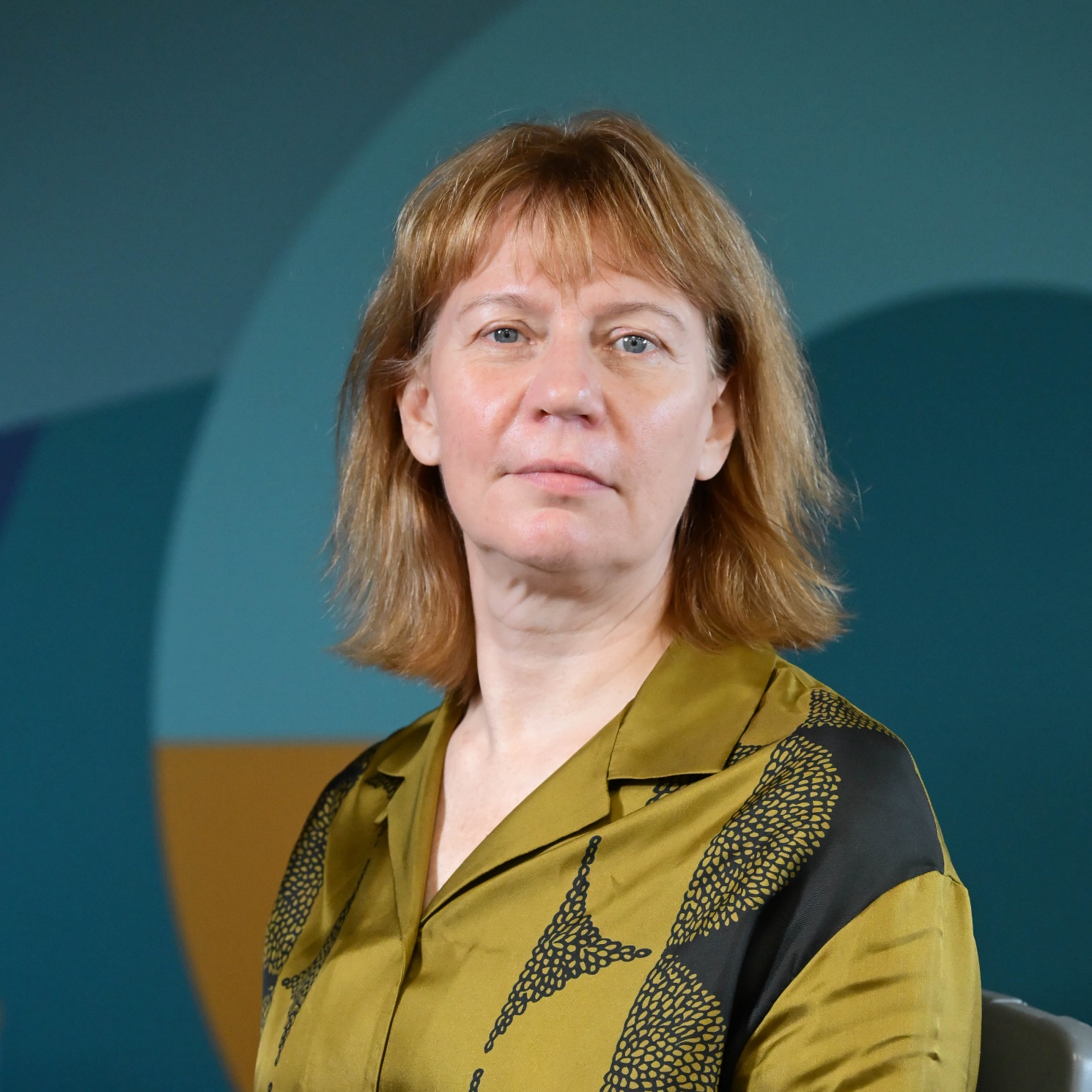
Francesca Kay (NSO, Ireland)
Francesca joined the Office for National Statistics (ONS) in 2011, where she was the Director of both the Economics Statistics and Census and Data Collection Transformation programmes and was appointed as interim Director General for Data Capability at the ONS in 2019, covering technology, data, methodology and data science. Francesca moved to the Central Statistics Office in Ireland in 2020, where her current role is Chief Information Office with responsibility for technology, methodology, data science as well as population and vital statistics. She is also leading a EU consortium for the creation of a One-Stop-Shop for AI/ML in Official Statistics.

Svilen Kolev, PhD, is a Deputy President of the National Statistical Institute of Republic of Bulgaria, responsible for the Macroeconomic Statistics. He took the role in July 2022 after longstanding career in the banking sector. His research interests are in the field of Monetary theory and monetary policy, Unconventional monetary policy, Central banking, Capital markets, Bank management, Macroeconomics, Statistics, Econometrics, International financial organisations.

Alexander Kowarik (Statistics Austria)
Dr Alexander Kowarik is head of the methods unit at Statistics Austria with more than 15 years of experience working at an NSI. He is an active contributor to the R open-source community with a focus on official statistics application and participating in several international projects related to the usage of new data sources for the production of official statistics.
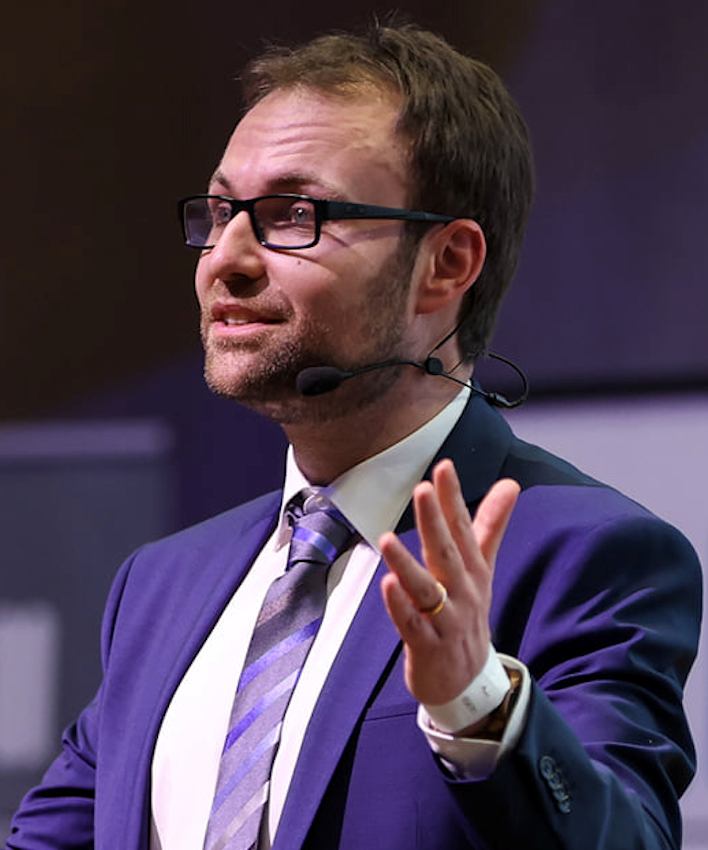
Christophe Ley (University of Luxembourg)
He is Professor of Applied Statistics at the University of Luxembourg and co-founder of GrewIA, a company offering comprehensive tailor-made training and innovative consulting solutions in Artificial Intelligence and Data Science. He is also the Chair of Applied Statistics in Actuarial Sciences at the University of Luxembourg and Editor-in-Chief of the Journal of Sports Analytics. Among his main achievements are the Bernoulli Prize in 2024, a Teaching Award at the University of Luxembourg in 2024, and the 2014 Marie-Jeanne Laurent-Duhamel Prize for the best PhD thesis in statistics among all french-speaking universities worldwide over a period of three years.

Michael Reusens is the head of the Data Science Center at the National Bank of Belgium. He holds a Masters degree in Computer Science Engineering and a PhD in Business Economics from KU Leuven, Belgium. Michael has over 10 years of experience in the domain of data science and artificial intelligence. Michael has worked as a researcher, hands-on data scientist and now as data science lead focusing on public sector organizations

Serena Signorelli works as project officer at the Joint Research Centre (JRC) of the European Commission, specializing in the analysis of digital and industrial ecosystems, strategic technologies, and their economic impacts. Her previous roles focused on the topic of data governance and on the use of big data for official statistics.

Anna Smyk (INSEE)
Time series methodologist at Insee (French INS).
Working on Seasonal Adjustment tools and methods, and mainly on JDemetra+ software, providing methodological support and training on seasonal adjustment and assistance in building production processes of seasonally adjusted data. Currently, in charge of the production of JDemetra+ v3.x online user documentation.
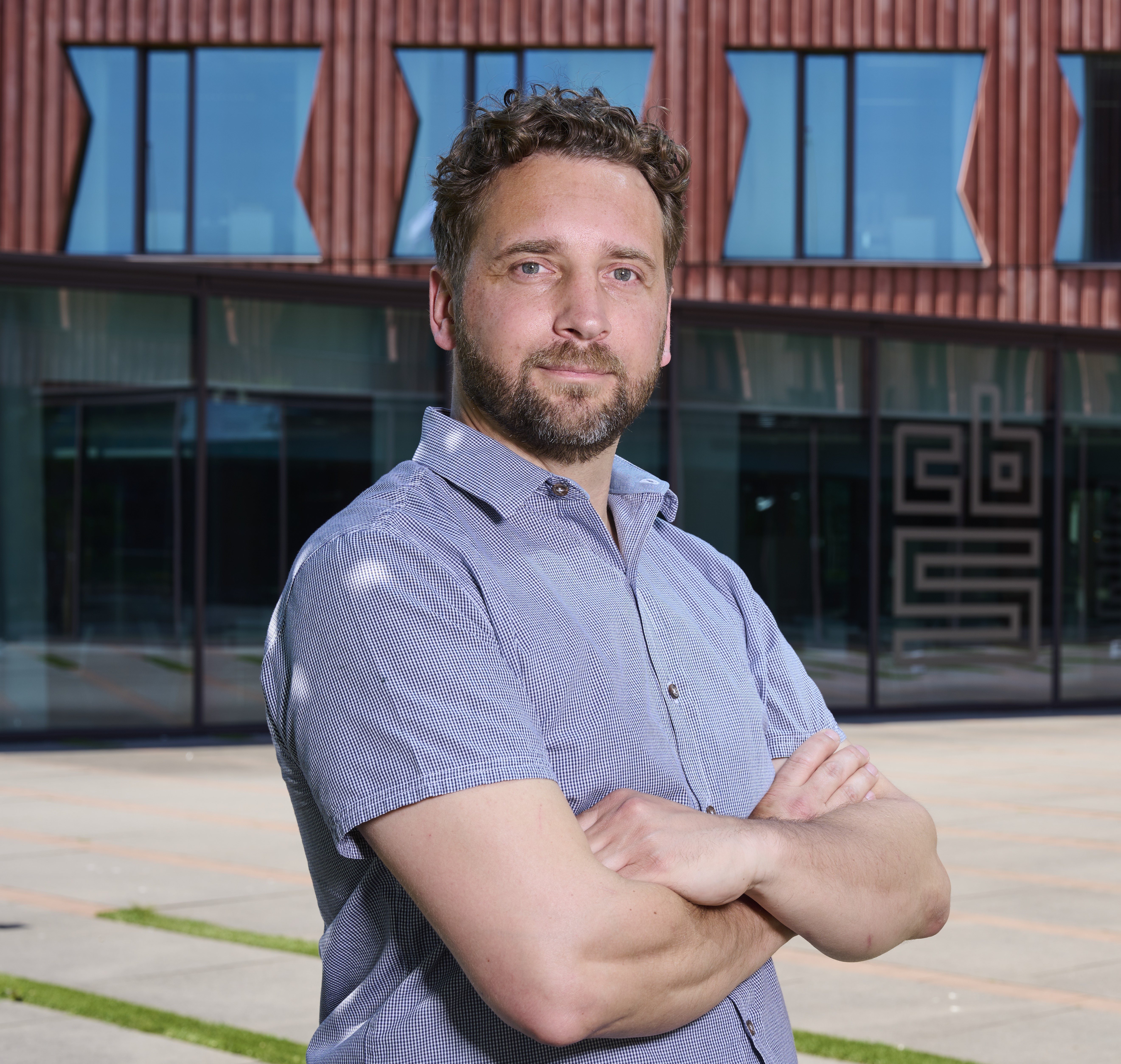
Mark Van der Loo (Eurostat, University of Leiden)
Dr Mark van der Loo is a Statistical Officer working in the area of data, metadata and classifications and a research fellow at the Leiden Institute for Advanced Computer Science. Before taking his post at Eurostat Mark worked as Senior methodologist at Statistics Netherlands (CBS). His research interests cover a broad range of topics in the areas of methodology and statistical computing.
EMOS Master’s Thesis Competition Award Ceremony
The European Master in Official Statistics (EMOS) every second year organizes the EMOS Master´s Thesis Competition (MTC) which aims to recognize and reward outstanding master’s theses developed by students enrolled in EMOS-labelled master’s programmes.
The 2027 Master’s Thesis Competition Award Ceremony will be held during the NTTS conference, where the winners will present their research and receive their awards.